
Why Fabric Matters More Than Brand (If You Want Clothes That Actually Last)

Updated: Sep 25
Most people shop by brand.
It feels like the safest shortcut - a familiar name, a certain price point, a sense of reliability. But if you’ve ever bought something from a “good” brand that didn’t hold up, you’ve already seen the flaw in that logic.
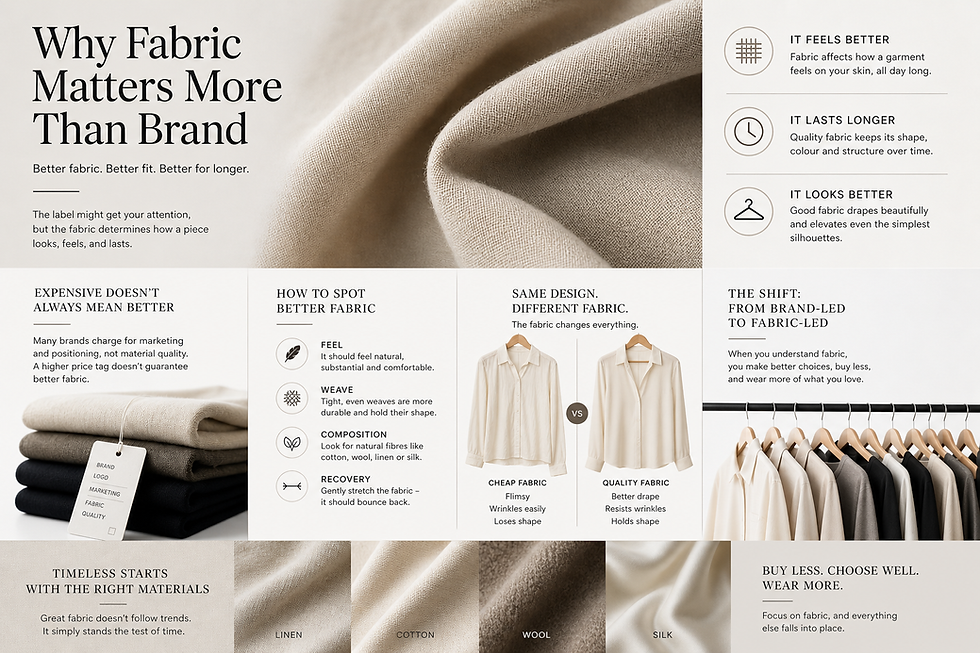
In reality: fabric matters more than brand.
If you understand why, you’ll start buying fewer, better pieces - and your wardrobe will quietly improve without spending more.
The Problem With Shopping by Brand
Brands are not consistent.
Even well-known labels:
use different suppliers across collections
adjust fabric quality to hit price targets
label clothing as 'wool' or 'silk' but if you read the label it's another blend story
produce both high-quality and low-quality pieces
A €300 wool jumper can still use mediocre fabric. A €120 jumper can have better material and feel exceptional.
The difference isn’t the label - it’s the material.
What Fabric Actually Determines
When you strip away branding, fabric controls almost everything that matters:

1. How a garment feels
Softness, weight, breathability — all dictated by fiber and weave.
2. How it looks over time
Good fabric:
holds shape
resists pilling
ages gradually
Cheap fabric:
loses structure
wrinkles awkwardly
looks tired quickly
3. How it fits (even if the cut is the same)
Two identical designs can feel completely different depending on fabric weight and drape.
Why Expensive Doesn’t Always Mean Better
Many brands price based on:
marketing
positioning
perceived status
Not strictly on material quality.
That’s why you’ll often find:
synthetic-heavy blends at premium prices
thin cotton used in “luxury basics”
polyester linings in expensive garments
Meanwhile, smaller or lesser-known brands may invest more in:
better mills
higher-grade fibers
more thoughtful construction
How to Tell If a Fabric Is Good
You don’t need to be an expert - just pay attention to a few signals.

Weight
Heavier doesn’t always mean better, but:
lightweight fabrics should feel intentional, not flimsy
heavier fabrics should feel structured, not stiff
Texture
Run your hand across it:
Does it feel flat and lifeless?
Or does it have depth and subtle variation?
Composition
Look beyond labels like “premium” or “luxury”.
Instead check:
% of natural fibers (cotton, wool, linen)
quality of blends (not all synthetics are bad, but cheap ones are obvious)
Recovery
Gently stretch and release:
good fabric returns to shape
poor fabric stays slightly distorted
Why Fabric Is the Foundation of “Timeless Style”
Timeless style isn’t just about silhouettes.
It’s about how clothing:
moves
ages
integrates into your wardrobe
A well-cut piece in poor fabric will never feel elevated.
But a simple design in great fabric can:
look intentional
feel refined
last for years
This is why some outfits look effortlessly put together - even when they’re minimal.
The Shift: From Brand-Led to Fabric-Led Shopping
Once you start paying attention to fabric, your behaviour changes:
Instead of:
“I like this brand”
You think:
“This material makes sense for how I want to look and feel and the price point is relevant”
Instead of:
impulse buying something (often expensive but made from cheap materials like polyester)
You:
notice details
compare quality
choose more deliberately
Where Chérie Comes In
At Chérie, the focus isn’t on brand recognition.
It’s on finding pieces that:
feel considered
use better materials
offer subtle but meaningful differences
priced without luxury price tag
Often from brands you wouldn’t discover on your own.
Because the goal isn’t just to buy something new.
It’s to build a wardrobe that:
feels better
lasts longer
makes sense over time
Final Thought
Brand might get your attention.
But fabric determines whether a piece earns a place in your wardrobe.
And once you notice the difference, it’s hard to go back.

Comments